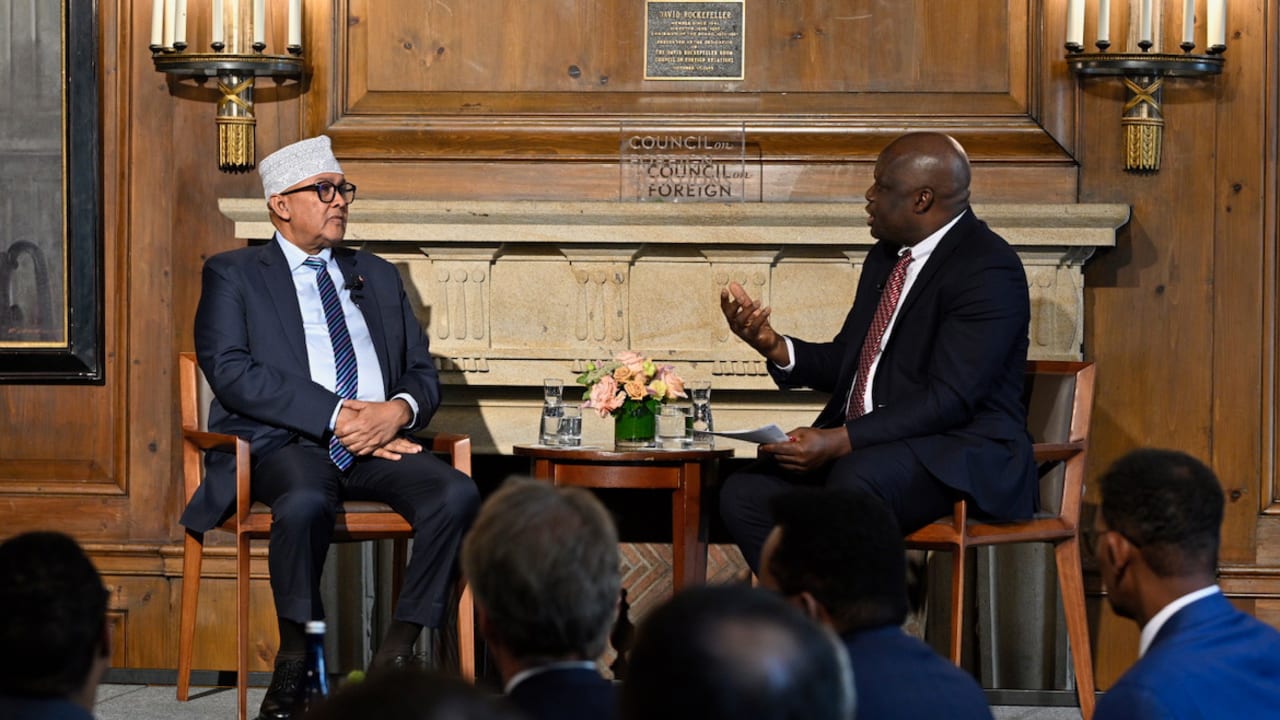
A Conversation With President Abdirahman Mohamed Abdullahi of Somaliland
Event date
Speaker
- President, Republic of Somaliland
Presider
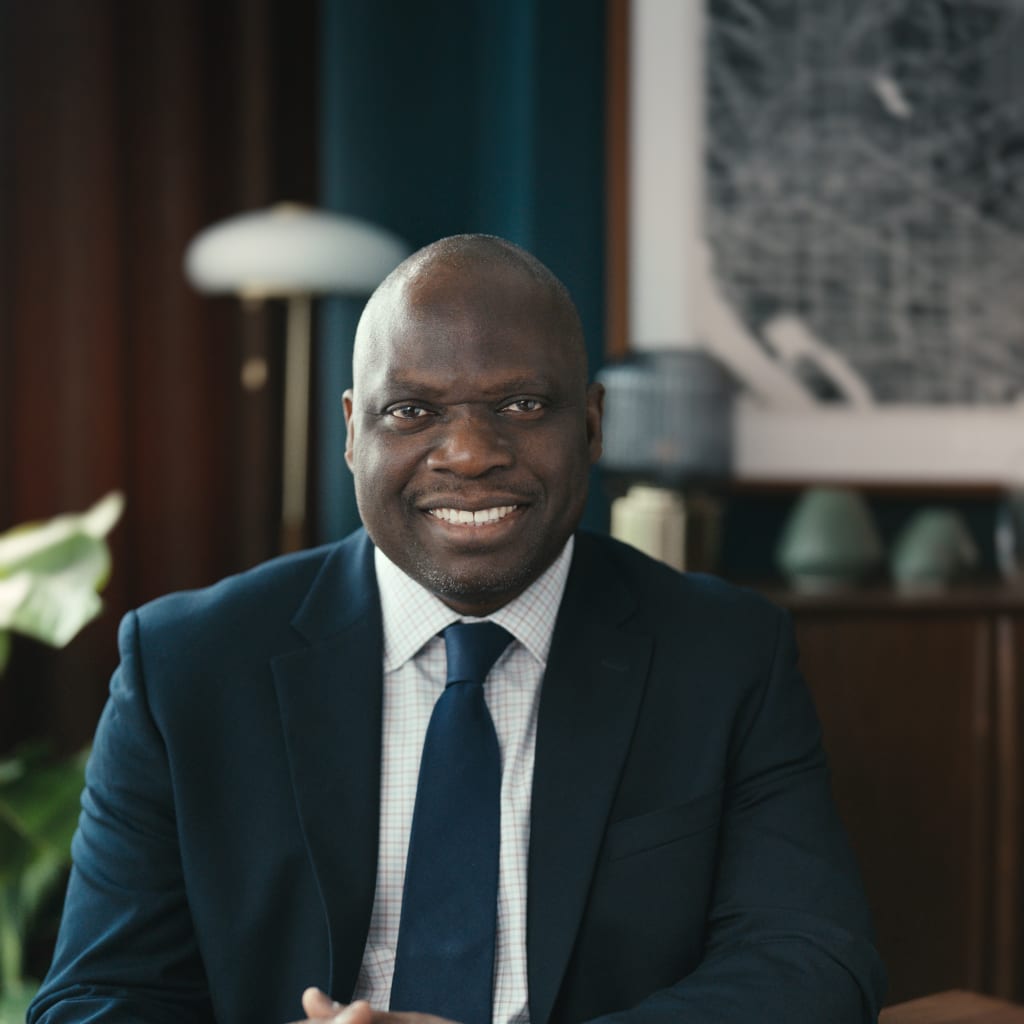 Ebenezer ObadareCFR ExpertDouglas Dillon Senior Fellow for Africa Studies, Council on Foreign Relations
President Abdirahman Mohamed Abdullahi discusses Somaliland’s bid for international recognition and the regional security landscape.
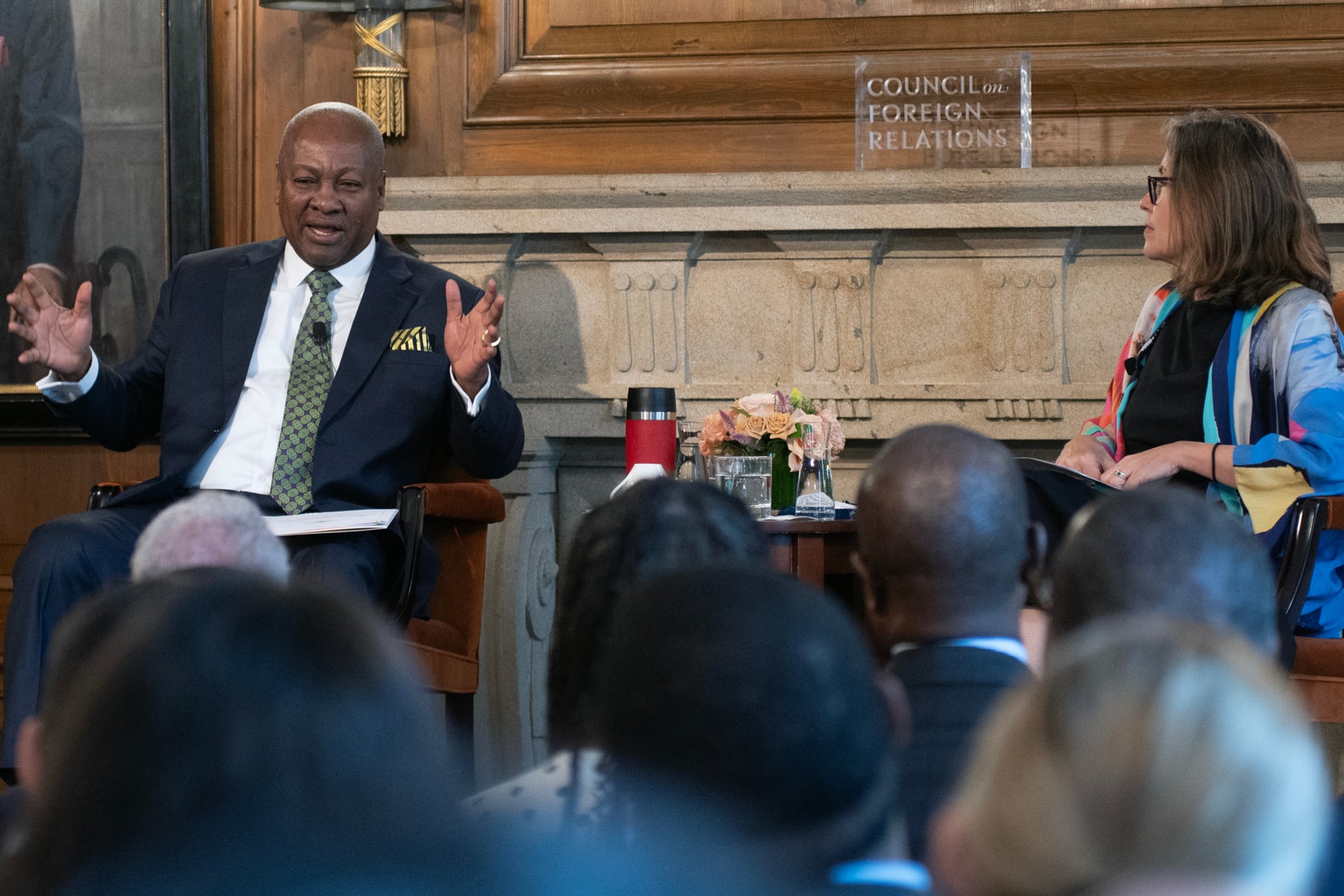
OBADARE: Good afternoon, everyone. Welcome to this special event. My name is Ebenezer Obadare. I’m Douglas Dillon Senior Fellow for Africa Studies here at the Council. And it’s a pleasure to have all of you here.
Our guest today is the president of Somaliland, Dr. Abdirahman Mohamed Abdullahi. I’m going to introduce him. It’s going to be a short introduction.
So Dr. Abdirahman Mohamed Abdullahi, nicknamed Irro, is the sixth and current president of Somaliland, having assumed office on twelfth December 2024. Born in 1955 in Hargeisa, which is the capital of Somaliland, he pursued early education across Somaliland, and later earned degrees and diplomas in business administration, African studies, and conflict resolution from institutions in the U.S., Russia, and Ethiopia. Dr. Abdullahi began his career in diplomacy, serving in Somalia’s Ministry of Foreign Affairs from 1981 to 1996, including as acting ambassador to Moscow. Returning to Somaliland in 1999, he co-founded the UCID party, and became a key figure in Somaliland’s democratization. He was elected to parliament in 2005 and served as speaker for twelve years, during which he championed peaceful political transitions and inclusive governance.
In 2012, he founded the Waddani Party, and led it to significant electoral success in 2021. He was elected president in 2024 with nearly 64 percent of the vote. Dr. Abdullahi is known for his diplomatic style. And let me warn you, in case you are thinking of muttering something under your breath, he speaks five languages. So careful right there. He speaks Somali, English, Arabic, Russian, and Finnish. So anything you say might be held against you by him. (Applause.) Dr. Abdullahi is widely respected for his commitment to dialogue and peace, especially as Somaliland seeks international recognition amid evolving regional dynamics. I’m going to be in conversation with Dr. Abdullahi, but first I would like to welcome him to the podium to make some preliminary remarks. Dr. Abdullahi. (Applause.)
ABDULLAHI: Good afternoon. I am honored to stand in front of you in this prestigious institution. Thank you. I would like to thank the Council of Foreign Relations for convening this distinguished group of foreign policy experts, business leaders, and thought leaders today. I also greatly appreciate this opportunity to share Somaliland’s perspective on a strategic shift that is shaping our region and the wider world.
For thirty-five years, Somaliland has governed itself as a peaceful, democratic, and responsible nation. We have a defined territory, a permanent population, an effective government, and a capacity to conduct international relations. We meet all four criteria for a state to be established by the Montevideo Convention that is still accepted today. Yet, Somaliland remains largely excluded from the international system. We have no seat at the United Nations, and therefore no vote in the U.N. decisions that directly affect our people and our region. We cannot directly access the resources of development finance institutions. To other countries, our business faces barriers to international banking and our government cannot enter many agreements in its own name.
This exclusion is not only unfair to Somaliland, it comes at a real economic and strategic cost to wider region and to the United Nation’s mission to promote peace and security. Somaliland is a country that, with limited international assistance, has developed functioning democratic institutions, held competitive elections and peaceful transfers of power, confronted terrorism, and attracted major investment, despite the constraints of nonrecognition. Our Ministry of Finance projected that, with diplomatic recognition, our economy could grow from 3.6 billion (dollars) in 2022 to 10 billion (dollars) by 2035. Annual growth could reach 8 percent by 2029. GDP per person could rise to more than $1,500 by 2035. Real exports could grow from less than 300 million (dollars) to more than $4 billion, driven in large part by greater use of Berbera as a gateway for regional trade.
Somaliland is ready to support American and international efforts to preserve freedom of navigation through Bab al-Mandab. We can contribute through intelligence sharing, maritime battles, and participation in regional security operations. We support a sustained international presence to ensure that no armed group can hold global commerce hostage. Both Taiwan and Israel understood this when they established formal relations with our nation. Many in the U.S. government understand this as well.
Recognition by others would also address a deeper contradiction with the United Nations. The U.N. has created to advance peace—was created to advance peace and security and self-determination. Yet, Somaliland, a democratic state that has maintained peace in a volatile region, is denied a voice, while Somalia uses the U.N. membership to silence our people—who it has not governed for more than three decades. Somaliland doesn’t seek recognition as an act of charity, nor are we asking the international community to create something new.
Somaliland became an independent nation in 1960. We entered involuntarily into a union that failed. And in 1991 we reclaimed the sovereignty we had previously been granted. Our people then did the difficult work of rebuilding the nation from scratch. No U.N. member state sought to impede Senegal and Gambia from dissolving the Senegal-Gambia Federation, or Egypt and Syria from dissolving the United Arab Republic. We must consider Somaliland’s recognition on similar terms. I have been present in Moscow, Soviet Union, when, in 1991, Soviet Union became fifteen republics.
The international community faces a straightforward choice: continue defending a diplomatic fiction that produces neither peace nor prosperity or recognize the reality of a democratic state ready to advance shared economic and security interests. (Applause.) The choice is clear.
Our cause is just. And today, especially the interests of the international community, are at stake. Another reality. Somalia claims sometimes we speak same language. It is true. But language is not a recipe for a union. Twenty-two Arab countries speak same language, Arabic. Twelve African countries use Swahili as their official language. USA and U.K. speak English. (Applause.) Many Latin American countries speak Spanish.
I look forward to your questions and, hopefully, to the support of everyone who has gathered for this timely discussion. Thank you. (Applause.)
OBADARE: Thank you again, Mr. President.
ABDULLAHI: Thank you.
OBADARE: So, as you’re aware, there’s a lot of interest among the American public in international affairs and international politics. So I guess the average American is bound to ask at this moment—and I will make it three questions, but it’s a single question—why is it that the United States should recognize Somaliland? So that’s one part of the question. Why now? And then I guess, most important, what does the United States stand to benefit from partnership with Somaliland?
ABDULLAHI: Well, I thank everyone who is in this important event. We have been in Washington for almost two weeks. We had a very useful engagement with the administration. Also we met several, or nearly a dozen, congressmen and senators. We are very satisfied with our engagement. We have agreed to deepen our relations with the United States. We discussed how can we be partnership with the United States in security, in marine security, in counterterrorism, in trade, in economy, in investment, and in the regional affairs.
Somaliland has been previously—or, historically located in a very important strategic location. Geography can say that. And at this particular moment in the world, which the problem of Bab al-Mandab, the problem of Hormuz, the problem with the world trade. I think Somaliland is indispensable partner for the United States and for the West in general to have a safe marine security for the world trade. And in Somaliland, we have 850 kilometers of seashore opposite of Gulf of Aden. I think for U.S. and the West, Somaliland is indispensable at this very time.
OBADARE: OK. Thank you. And let me congratulate you, I should have done that earlier, for getting recognized by the state of Israel. That was in December last year. But when I think back to that moment, what I remember is the condemnation from various quarters. The African Union was having none of it. The Arab League, Turkey, Egypt, Saudi Arabia. All of those entities and countries denounced what the Israelis had done. And the question for me is this, what is it that all these countries and all these regional groupings—what is it that they are not getting about Somaliland as a country?
ABDULLAHI: Well, I think human beings or countries, it’s natural that there again is the change, or the status quo. They kept—we have been talking to the African—our brothers in Africa, we have been talking to our brothers in the Arab League for thirty-five years. And for that period we didn’t get a very positive response. And in 2025, I have written letters to all world leaders. And only Israel has responded positively to recognize Somaliland. So there were Arab League as an organization, and AU as an organization has denounced it, the recognition of Israel to Somaliland. But not all African countries. I think the majority were silent, as individual countries. And some of the Islamic countries, maybe half of them, didn’t, as countries, denounce the recognition of Israel to Somaliland. So I think there is—when you consider maybe half of the Africans did not denounce, half of the Islamic and Arab countries didn’t denounce, we consider that as a general acceptance just waiting when to recognize. Yes.
OBADARE: OK. So it’s important that you’re focusing on getting the United States onboard. This is the most important country militarily, economically, and diplomatically in the world. But we’re also—you and I are from Africa. There are fifty-four countries in Africa. It seems as if so far none of them is onboard. And you mentioned earlier that a few of them were silent. Insofar as we cannot conclude that silence means consent, I’m wondering what your Africa/African Union strategy is. How do you hope to convince all these African countries to get onboard? And what difficulties are you facing at the moment?
ABDULLAHI: I think, in short, the AU has sent a fact-finding mission to Somaliland in 2005.
OBADARE: Can you say more about that mission, for those who don’t understand, what that mission found out?
ABDULLAHI: Well, at the request of Somaliland, the AU, African Union, has sent a mission to Somaliland, a fact-finding mission. And the conclusion of the mission is already available to anyone. And the report says that Somaliland case is unique, because it has been a country, sovereign country, on 26 June 1960. So it was short of saying recognize Somaliland, but they said they have the right for self-determination. What we request AU, or our African brothers, is just to consider that the mission’s report and accept the proposal of the report, which clearly says the uniqueness of Somaliland case and its right for self-determination. That’s what we seek from Africa, from our Africa brothers. (Applause.)
OBADARE: And the second part of the question, so why has there been so much—why are these majority of African countries reluctant to come along with you? And, as I asked you earlier, what are you doing to persuade them to give you recognition?
ABDULLAHI: I think there are some countries who are campaigning against Somaliland. Some African countries and some non-African countries. Turkey is campaigning against Somaliland. It has been visiting African countries and meeting African presidents since the recognition of Israel. I think many who could have recognized Somaliland didn’t, because of the campaign against big governments. And these—(inaudible)—were campaigning against Somaliland. And hopefully, the reality will come, and people, the countries, will independently decide their own decisions in the future.
OBADARE: Well, Mr. President, so you mentioned something earlier. Let me come back to it. You said during your remarks, what’s wrong with one Somalia? Why don’t you want to get along with your brothers in the next country?
ABDULLAHI: Well, ethnically, we are Somalis. But, as I said, there are twenty-two Arab countries who speak same language, who share same religion. And they are twenty-two countries. There are twelve African countries who speak Swahili, and they also share mostly same religion. Somalia and Somaliland has been two sovereign countries. Somaliland got its sovereignty from Great Britain on 26 June 1960. And Somalia gained its sovereignty from Italy. So we had two separate colonial administrations, two sovereign states Like any other African countries, there are maybe twenty African countries who became independent in 1960.
So in the first place, we have been two entities separate from each other—one Italian administration and one British administration. We united for only one reason: to unite all Somali-speaking territories under one flag. And that dream didn’t become true. Somaliland and Somalia united. Djibouti became independent country. It was one of the Somalis we want to unite. Another part is still part of Ethiopia, Somali state of Ethiopia. And you know that there was a war between Somalia and Ethiopia for two times, in 1964 and in 1977. There was a land dispute for this territory. And the other part is under Kenya. It is called Northern Frontier District, or Northern Kenya, mainly inhibited by Somalis. I wonder whether the world is supporting a recipe for war or recipe for peace. (Applause.)
OBADARE: So I’m aware you had a meeting with Assistant Secretary of State for African Affairs Frank Garcia. Could you please tell us how that went?
ABDULLAHI: It went very well.
OBADARE: What do you mean?
ABDULLAHI: What I mean is that we have no differences of what we have discussed—security, trade, counterterrorism, investment. Almost we have been eye to eye, I can say.
OBADARE: So you’ve spent the last couple of weeks in the United States. So as you head back to your country, what’s the takeaway? What kind of mood are you in? Are you optimistic? And what do you think still needs to be done?
ABDULLAHI: Well, we need two things. One, the priority of my people is to get recognition. Also, they want livelihood. Economy must be better. So the other thing is that we have to take the obstacle from Somaliland, so we can be an institution that can connect business with international banking system. We are a rich country. We support animals, maybe five million areas of sheep and goats. Our bankers cannot receive this money back. And they cannot send money. We get money through some other mechanisms, like money remittances and others.
Many investors want to come to Somaliland. And they need international financial institutions. So we are discussing this. Congress has also raised this question with the Treasury Department. We also met with the Treasury Department and discussed this issue. We met with the Department of Energy. We met with the Department of War. So all of them, we had very fruitful discussions. And I can—the takeaway is that we had fruitful discussions with the United States administration, the Congress, and the Senate. Yes.
OBADARE: OK. We’re going to ask people in the audience to ask questions, but before we do I have a final question for you. I want to come back to this question of security. You mentioned it in your preliminary remarks. Somaliland is located in a very, let’s say, interesting corner of Africa. Can you expand on what collaboration with the United States, recognition from the United States, will mean in terms of security for the United States?
ABDULLAHI: I think no one disagrees that United States is the most important country on Earth, economically, militarily. And it has the greatest impact in the world today. So any signal from the United States will make a difference. And maybe many countries are waiting for the signal of the United States. Yes.
OBADARE: OK. Thank you, Mr. President. Just a reminder that this is on record. So if you have questions, please raise your hand, introduce yourself, and make it very brief. My friend.
Q: Your Excellency, thank you so much for coming today. My name is Mark Vlasic. I teach international law and diplomacy at Georgetown. I’m also a TV producer in Hollywood.
But early in my life I worked at the U.N. War Crimes Tribunal for Yugoslavia, and worked on some of the independence aspects of the former Yugoslav states. Have you thought about the lessons learned from the former states regarding Yugoslavia, and what you can learn from that experience? Thank you.
ABDULLAHI: Well, that’s very good question. I have been in Moscow between 1988 and 1996. And Yugoslavia was a former ally of Soviet Union. In 1991, the world was immediately changing. There was—I had been representing Somalia in Moscow at that time. And Yugoslavian embassy in Moscow became five separate countries in a day. And all Soviet Union, which was fifteen republics, became fifteen separate countries. And while I was in Washington, I met some of the former Soviet Union countries. I told them that they were lucky. In 1991, they were not countries. So in Yugoslavia, they were accepted to be five separate countries. And they were accepted the Soviet Union to be fifteen countries. Why they want that Somalia and Somaliland stay together forever? (Laughter.)
OBADARE: Thank you, Mark.
There, and then I’ll come to you.
Q: Thank you, sir, Mr. President. My name is Ariel Cohen. I’m a senior fellow at the Atlantic Council and member of Council of Foreign Relations.
I do geopolitics and energy. The Horn of Africa today, with the Houthi aggression and international support of the Houthis, became a chokepoint, just as the Strait of Hormuz. It’s a threat to international security, and international energy security, and the wellbeing and economic survival of the world. How do you see the correlation of forces, to use a Soviet term, around the Horn of Africa and, in particular, in Somaliland? And what kind of role do you see Somaliland can play to improve the security, and to push back against those who want to destroy the West? Thank you.
ABDULLAHI: Well, Somaliland has been keeping its water safe for thirty-five years, for free, to the whole world. Now we are ready to be a partner in safeguarding the world trade, the world energy, terrorism, and the world trade as well. So Somaliland is ready to be a partner in protecting the world trade, in protecting marine security. And we have told our friends in United States we are ready to be a security partner together. And I think Somaliland will have a major impact in providing the world. I can say, Somaliland at this time, if the world tries to be secured, it is indispensable.
OBADARE: Thank you, Mr. President.
Q: Thank you. My name is Alexandra Starr and I’m with International Crisis Group.
My question is in regards to what you would expect in the event that the United States did recognize Somaliland. Do you expect to come under some kind of security umbrella? Would you expect some kind of military deployment?
ABDULLAHI: Well, if United States recognizes Somaliland, Somaliland—I think many countries around the world, as I said, may be waiting for the signal of the United States. So, recognition of Somaliland will take the barriers of the financial institutions to Somaliland, so Somaliland will be a useful member for the world trade. The recognition of the United States will bring more investment to Somaliland. Yes.
OBADARE: Can you be more specific about that? I’m sure there are people in the business and investment community in the room who want to know about the kind of prospects that Somaliland offers, business-wise.
ABDULLAHI: Well, Somaliland is very rich, as I said. But there are barriers that are keeping away from Somaliland. This including maybe the travel advisory of the State Department, lack of recognition itself. Somaliland is a very rich country in resource. And I believe that many investors will come to Somaliland if United States. We have we are rich in minerals, all kinds of minerals. We have oil and gas. We have 850 kilometers of seashore, full of marine resources. We have millions and millions of animals. We can be a great basket for meat in the world. We can be a very good tourist destination as well. So we are—in energy sector, there is many opportunities in energy sector. In trade we can be a major, major corridor—trade corridor to the inland-locked African countries, mainly to Ethiopia, and beyond as well.
OBADARE: Thank you.
Q: Thank you. Jeff Laurenti with New Jersey’s Capital City Redevelopment Corporation.
Mr. President, most Americans remember Somalia, if they remember it at all, for the 1992 postelection intervention by the lame duck departing George H.W. Bush administration, sending troops as a measure of humanitarian relief in a period of starvation. Yeah. And perhaps you can—and they don’t remember it well. They don’t remember that experience well.
Perhaps you can tell us, first, how you think Al-Shabaab did not get roots down in the northern part of the country, the Somaliland that you represent, whereas in the formerly Italian one—and I can’t believe the Italians sent Sicilian crime families as their administrators to tutor folks—why that the rest of Somalia was prone to these kinds of criminal and terrorist groups?
And can you tell us, if you would, how the lack of international recognition impedes international agencies from providing humanitarian assistance, if you ever need it—World Food Programme, World Health Organization, all that—how you interact with the international system? Is it really analogous to Taiwan-China?
ABDULLAHI: Thank you. Thank you very much. In Somaliland, in 1991, when the state of Somalia failed, Somaliland citizens started a local, homemade peace process. That’s why Somaliland is safe. Unfortunately, the process of peace in Somalia was imported by the international community. They held in five-star hotels a peace process in Djibouti, in Addis Ababa, in Nairobi, in Cairo, in Jeddah, and maybe elsewhere. And until today, there are peacekeepers. 1992, President Bush restored hope, yes. But in Somaliland, everything is homemade. And most of the people—the ownership of peace is owned by the people. And every citizen of Somaliland want that Somaliland to be safe. So if they suspect anyone—for example, if you go to Hargeisa and want to rent a house, and they don’t know you, they will inform the police. Someone want to rent the house. And we have to check your background. So I can say every Somaliland citizen acts as a police officer. Thank you.
OBADARE: Thank you. Ishaan Tharoor. I’m the Edward Murrow Fellow here at CFR and columnist at the New Yorker.
Mr. President, on the security side there has been a fair amount of speculation about Somaliland becoming a platform for various forces around the world, specifically the Israelis and the Emiratis, to have certain operations. I would like you to, on the record, clear up what the Israelis and Emiratis may be doing on your soil. And secondly, according to reports, apparently you have suggested naming the airport in Berbera after President Trump and you’ve encouraged the construction of a Trump Tower in Hargeisa. Would your pitch for recognition from the U.S. perhaps be better served by being a bit more bipartisan? Thank you.
ABDULLAHI: Well—
OBADARE: Do you want to start with the second part of the question? (Laughter.)
ABDULLAHI: With the acceptance of the president, we can call the Berbera airport Trump Airport. And I am, by the way, the first African leader who suggested a Nobel Peace Prize for President Trump. (Applause.) Regarding there is no—that question has come to me several times. There is no Israeli and U.S. Army presence, major presence, in Somaliland at the moment.
Q: At the moment.
ABDULLAHI: Sorry?
OBADARE: Yeah, yeah, said, at the moment. Yes.
ABDULLAHI: At the moment. We want to partner on security both in Israel and United States as well. So in the future, I cannot rule out any presence. But now there is no presence of Israeli troops, or we are in discussion now with the Department of War if they can train some of our troops.
Regarding Emirati, Emirati had a lease in Berbera airport. But they’re—in our knowledge, or there is no major Emirati army presence in Berbera at all. The concession has been given, but there is no major—and I think one reporter came. Then we allowed other reporters to go there, to the airport, and see. They have seen nothing. Yes. One French reporter one time wrote a story, and we have allowed the press freely to go and check the airport. So they have checked it. And they prove it there is no such story at the airport of Berbera.
OBADARE: Thank you.
Q: Mr. President, my name is Abdscur Mohammed (ph) from Tirin (ph) Institute. Welcome to America.
Mr. President, you have spoken about Somaliland being open for business. Mr. President, as the United States looks for new and reliable critical mineral supply, what’s Somaliland’s strategy on that? And have there been any discussion on that while you are here?
ABDULLAHI: Well, in general, Somaliland, we are a free market, Somaliland. And we are welcoming any investor in Somaliland in any sector, including minerals. In short, there are many—some companies who are interested in Somaliland minerals, different minerals. But we have—until now, there is no major breakthrough for companies to invest in Somaliland. Some in discussion. And we have made them connected to the Ministry of Minerals of Somaliland, who will give any information they seek. But they are welcome. So any company, any American company, is most welcome. Also, from other countries, investors are welcome to Somaliland.
Q: Thank you very much for being here, Elliot Waldman, editor-in-chief, World Politics Review.
As you know, Somaliland cooperates quite closely with Taiwan on a variety of issues. Could you perhaps talk a little bit about how you see that relationship evolving in the future, what you hope Somaliland could gain from Taiwan, and, as Somaliland courts recognition from the United States, do you have any concern about Somaliland’s status being caught up in the wider geopolitical competition between the two countries?
ABDULLAHI: Well, in general Somaliland and Taiwan have signed a cooperation agreement and exchanged offices, or embassies in 2020. And the speaker was the foreign minister at that time. And he signed the agreement. And Ambassador Mohamoud was the first ambassador for Somaliland in Taiwan. From that period, 2020, we had very friendly cooperation with Taiwan. Currently, my minister of interior is in Taipei. He met the president of Taiwan. We cooperate in health, in education, in training, in technology, and in other fields. We consider as a partner and a friend Taiwan. China is not happy with our relations with Taiwan, but we are independent country and we decide our own decisions. So we desire to keep Taiwan in Somaliland.
OBADARE: I think we have time for a couple more questions. Take one from there.
Q: Mr. President. My name is Elizabeth Bradley. I’m the president of Vassar College.
So I wanted to ask you a question about higher education. What is your aspiration for Somaliland and its higher education? And are there partnerships with the West where it can be win-win?
ABDULLAHI: Well, in general, we started everything from ground zero. And now when—I went back to the country in 1999. At that time, the fairest universities were to be established. Amoud University was the first, and Hargeisa University. They started with one class or two class. And now they are big universities. Also, almost now in every region there is a university. Maybe not the size you think of the United States university, but we have universities. And the number of graduating in our universities is not less than 10,000 a year now. We wish to have cooperation or twinning of the universities in the United States and the universities of Somaliland. They are most welcome. Since we have not been considered as a recognized country, our cooperation for the West and for other countries was limited. But now we consider ourselves as a recognized country, or at least a partially recognized country, so I think we can enter agreements with U.S. universities and Somaliland universities.
OBADARE: I’m being informed that the president has to go to another function. I can take one final question. Anyone?
Q: Mahesh Kotecha. I would like to—first, I’m a financier, but I’m from Africa. And I was from Uganda originally. I’m an American now.
ABDULLAHI: Idi Amin? (Laughter.)
Q: Yes.
My question to you—first of all, my congratulations on how well you have done in Somaliland, considering the difficulties that you face of recognition from not only AU and the U.N., but many other countries. So I congratulate you on the hutzpah, as they say in this city, the strength of your courage and your people. To me, what’s the strongest case—and I would like you to make that, if possible—is the case for the people of Somaliland who suffer growth impairment and opportunities. Could you talk to the cost of not being recognized for the people of Somaliland?
ABDULLAHI: Thank you. In general, Somaliland was trying to build a nation from scratch. If I give you an example, the Somaliland budget started with $18 million a year to manage security, education, health, infrastructure. And it has been growing. We didn’t get direct bilateral assistance from no country in the world. Now our budget is about half a billion (dollars). Still, it is not enough. Last year alone, I have mobilized 6,000 new militia to become part of the army and police. I didn’t have budget for that, but I decided to do it. And one American general told me, how did you do it?
So the other thing is that we are—we have a barrier with the international financial system, which is the great barrier to our development. Because if we export, we cannot get the money directly. If we are importing, we don’t have banks who can open letter of credit, for example. But our people are naturally traders. They don’t get tired. They take cash to Djibouti, or to Dubai, and send there to India, or to China, or to United States when they went to buy something. So we are—if this barrier is taken, Somaliland can be rich by itself. (Laughs.) It can do better in health, in education, in roads, in infrastructure, in water. But we have a barrier. As I said, our budget is about 300 million or 500 million (dollars), and our exports are about now 300 million (dollars). If Somaliland is recognized or this barrier is taken, Somaliland could be much, much better. Yes. (Applause.)
OBADARE: Thank you to President Abdullahi and to those of you joined us for today’s meeting. Please note that the video and transcript of this session will be posted on CFR website. At this time, if our New York audience could please stay in the room, CFR staffers will open the door for President Abdullahi. Thank you so much. Really appreciate it. Thank you. (Applause.)
(END)
This is an uncorrected transcript.